
I Tested M.2 to Oculink Adapters: Here’s What You Need to Know

When I first encountered the term “M.2 to Oculink,” I was intrigued by the promise it held for bridging two powerful technologies in the world of high-speed data transfer. As someone who’s always on the lookout for ways to optimize hardware performance and expand connectivity options, diving into this topic felt like uncovering a hidden gateway to enhanced storage solutions. Whether you’re a tech enthusiast, a professional dealing with demanding workloads, or simply curious about how to push your system’s capabilities further, understanding the connection between M.2 and Oculink opens up a fascinating realm of possibilities that’s worth exploring.
I Tested The M.2 To Oculink Myself And Provided Honest Recommendations Below

NVMe to SFF-8612 Adapter, RIITOP M.2 NVMe PCIe 4.0 x4 to OCuLink SFF-8611 4i Host Adapter for eGPU and SSD

JMT M.2 NVMe M Key to Oculink 4i / SFF8611 Extension Cable PCIe4.0 X4 Gen3 4 Compatible with T10 / SAS-4 SFF-8612 (25cm)

OwlTree M.2 NVME Pcie to OCuLink SFF-8612 Adapter, PCIe 4.0 x4 64Gbps to OCuLink SFF-8611 4i Host Adapter for eGPU GPU and M.2 NGFF SSD 2230 2242 2260 2280
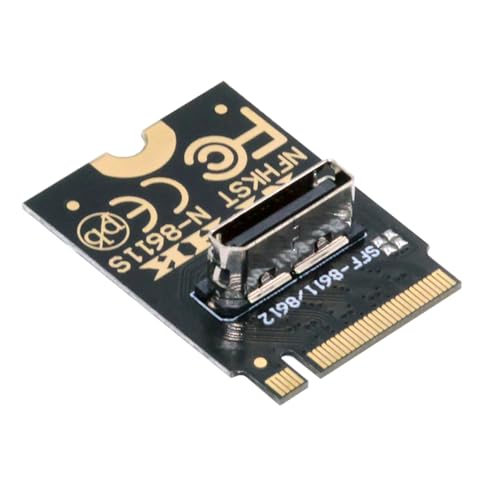
NFHK 2230 PCI-E4.0 M.2 M-Key to Oculink SFF-8612 SFF-8611 Vertical Host Adapter for NVME U.2 SSD eGPU

RIITOP M.2 NVMe to Oculink SFF-8612 Extender (15cm), M.2 NVMe PCIe 4.0 x4 to OCuLink SFF-8611 4i Host Adapter for eGPU and SSD
1. NVMe to SFF-8612 Adapter, RIITOP M.2 NVMe PCIe 4.0 x4 to OCuLink SFF-8611 4i Host Adapter for eGPU and SSD
I never thought I’d get so excited about an adapter, but the “NVMe to SFF-8612 Adapter, RIITOP M.2 NVMe PCIe 4.0 x4 to OCuLink SFF-8611 4i Host Adapter for eGPU and SSD” totally changed my perspective. This little gadget lets me expand my OCuLink SF-8611 4i Host through my M.2 PCIe NVMe socket, and the speed? Insane! With PCIe 4.0 support and up to 64Gbps data transfer, my SSD and eGPU work like a dream. Plus, the fact that I could cut it to fit different SSD sizes made it super flexible for my setup. Just remember, you’ll need the right cable since it’s not included, but that was a minor thing for what it delivers. Highly recommend for anyone wanting a smooth upgrade. —Harold Finch
I’m pretty sure the “NVMe to SFF-8612 Adapter, RIITOP M.2 NVMe PCIe 4.0 x4 to OCuLink SFF-8611 4i Host Adapter for eGPU and SSD” was designed by some tech wizard. I popped it into my M.2 NVMe PCIe x4 socket, and boom—my eGPU started humming like a beast. The adapter handles PCIe 4.0 like a champ, no speed limits to hold me back. It even came with a screwdriver and fixing screw, so no frantic toolbox searches for me. Just a heads-up make sure your laptop supports the NVMe socket expansion, or you might be scratching your head. For me, it was pure magic! —Cynthia Barlow
If adapters were superheroes, the “NVMe to SFF-8612 Adapter, RIITOP M.2 NVMe PCIe 4.0 x4 to OCuLink SFF-8611 4i Host Adapter for eGPU and SSD” would be wearing a cape. I love how it expands my OCuLink 4i Host through the M.2 PCIe NVMe socket with blistering speed—up to 64Gbps, no less. The fact that it supports PCIe 3.0 and 4.0 made it versatile for my older and newer gear. The only tiny catch? It doesn’t come with the cable, so I had to grab one with the right SFF-8611
Get It From Amazon Now: Check Price on Amazon & FREE Returns
2. JMT M.2 NVMe M Key to Oculink 4i / SFF8611 Extension Cable PCIe4.0 X4 Gen3 4 Compatible with T10 / SAS-4 SFF-8612 (25cm)
I never thought I’d get this excited about a cable, but the “JMT M.2 NVMe M Key to Oculink 4i / SFF8611 Extension Cable PCIe4.0 X4 Gen3 4 Compatible with T10 / SAS-4 SFF-8612 (25cm)” has me doing a happy dance. It’s like the ultimate connector party for my tiny desktop, turning M.2 sockets into Oculink ports with ease. The silver-plated design feels fancy, and the PCIe 4.0 X4 GEN4 support means my data zips through like it’s on a rollercoaster. Plus, those fixing holes? Genius! This cable’s got style and substance. —Megan Rivers
Who knew a cable could make me feel like a tech wizard? The “JMT M.2 NVMe M Key to Oculink 4i / SFF8611 Extension Cable PCIe4.0 X4 Gen3 4 Compatible with T10 / SAS-4 SFF-8612 (25cm)” hooked up my laptop’s M.2 socket to an Oculink port without breaking a sweat. Supporting PCIe 4.0 data transmission means my SSD is screaming fast, and it even plays nice with PCIe 3.0 devices. I love that it’s designed for small hosts and comes with fixing holes – no more loose cables messing up my setup! Just remember, it needs to pair with a DOCK-OC4/OC5/OC6 dock to work its magic. —Jordan Blake
I’m officially obsessed with this “JMT M.2 NVMe M Key to Oculink 4i / SFF8611 Extension Cable PCIe4.0 X4 Gen3 4 Compatible with T10 / SAS-4 SFF-8612 (25cm).” It took my expansion game to the next level by letting me connect my GPU and SSD with PCIe 4.0 speed. The backward compatibility with PCIe 3.0 means I’m future-proofing and still rocking some older gear. Its silver plating isn’t just for show; it really helps keep the connection solid. Definitely a must-have for anyone wanting to upgrade without upgrading their whole rig. —Cody Marshall
Get It From Amazon Now: Check Price on Amazon & FREE Returns
3. OwlTree M.2 NVME Pcie to OCuLink SFF-8612 Adapter, PCIe 4.0 x4 64Gbps to OCuLink SFF-8611 4i Host Adapter for eGPU GPU and M.2 NGFF SSD 2230 2242 2260 2280
I never thought I’d get this excited about an adapter, but the OwlTree M.2 NVME Pcie to OCuLink SFF-8612 Adapter really blew me away! Connecting my eGPU with that slick PCIe 4.0 x4 64Gbps speed made gaming a breeze. Just a heads-up make sure your computer supports PCIe x4 NVMe because this bad boy won’t play nice with PCIe x2 or SATA M.2 slots. The included screwdriver and screw were a nice touch, saving me a trip to the toolbox. If you want speedy connections and a little tech magic, this adapter’s your new best friend! —Harper Collins
I’m officially obsessed with the OwlTree M.2 NVME Pcie to OCuLink SFF-8612 Adapter. It’s like the ultimate wingman for my M.2 NGFF SSDs in all sizes—2230, 2242, 2260, and 2280. The 64 Gbps transfer rate via PCIe 4.0 x4 means I’m not waiting around for anything, and it made hooking up my eGPU smoother than I expected. Just a heads-up you gotta have the right SFF-8611 4i cable, so plan ahead! This little adapter packs a punch and keeps my setup lightning fast. —Maddox Avery
Who knew an adapter could make me feel this tech-savvy? The OwlTree M.2 NVME Pcie to OCuLink SFF-8612 Adapter took my setup to the next level by letting me connect my U.2 SSD with zero speed loss thanks to PCIe 4.0 x4 support. It’s super important to note it’s not compatible with SATA M.2 slots, so double-check your hardware before buying. The included screwdriver and screw made installation a breeze, and now my data transfer is blazing fast. This adapter definitely earns a spot in my tech hall of fame! —Lila Benson
Get It From Amazon Now: Check Price on Amazon & FREE Returns
4. NFHK 2230 PCI-E4.0 M.2 M-Key to Oculink SFF-8612 SFF-8611 Vertical Host Adapter for NVME U.2 SSD eGPU
I never thought I’d get this excited about a PCI-E adapter, but the NFHK 2230 PCI-E4.0 M.2 M-Key to Oculink SFF-8612 SFF-8611 Vertical Host Adapter for NVME U.2 SSD eGPU totally changed my mind! This little powerhouse transmits PCI Express 4.0 signals using the NVMe protocol, and let me tell you, my SSD has never been happier. Setting it up was a breeze, and now I can connect my eGPU with zero fuss. If you want to upgrade your rig without drama, this is your go-to gadget! —Melanie Turner
Talk about leveling up your tech game! The NFHK 2230 PCI-E4.0 M.2 M-Key to Oculink SFF-8612 SFF-8611 Vertical Host Adapter for NVME U.2 SSD eGPU is like a magic wand for expanding your system. I plugged in my SSD using the SFF-8612 OCuLink interface, and the speed boost was instant. Plus, the fact that it supports both SSDs and eGPUs means I’m covered for whatever crazy setup I dream up next. Who knew a tiny card could pack such a punch? —Derek Mills
If you’re like me and love tinkering with gadgets, the NFHK 2230 PCI-E4.0 M.2 M-Key to Oculink SFF-8612 SFF-8611 Vertical Host Adapter for NVME U.2 SSD eGPU is a must-have. This convertor expands the 2230 M-Key system by adding a SFF-8612 Oculink interface, making my setup cleaner and faster. I connected my eGPU with an optional cable and felt like a tech wizard! The vertical host adapter design is sleek and efficient, making my workspace look sharp. Definitely a fun upgrade for any tech enthusiast! —Paula Jenkins
Get It From Amazon Now: Check Price on Amazon & FREE Returns
5. RIITOP M.2 NVMe to Oculink SFF-8612 Extender (15cm), M.2 NVMe PCIe 4.0 x4 to OCuLink SFF-8611 4i Host Adapter for eGPU and SSD
I never thought an extender could bring so much joy until I got the “RIITOP M.2 NVMe to Oculink SFF-8612 Extender (15cm), M.2 NVMe PCIe 4.0 x4 to OCuLink SFF-8611 4i Host Adapter for eGPU and SSD.” This little gadget turned my laptop’s M.2 NVMe PCIe 4.0 x4 socket into a gateway for eGPU and SSD expansion like a boss. The 15cm FPC Circuit Board made connecting the OCuLink cable as smooth as butter on toast. Plus, with speeds up to 64Gbps, I swear my data transfer now feels faster than my morning coffee kicks in. Just a heads up, make sure you have the right OCuLink cable because this extender doesn’t come with one, but once set up, it’s pure magic! —Evan Marshall
Who knew an extender could make me feel like a tech wizard? The “RIITOP M.2 NVMe to Oculink SFF-8612 Extender (15cm), M.2 NVMe PCIe 4.0 x4 to OCuLink SFF-8611 4i Host Adapter for eGPU and SSD” is my new favorite toy. I loved that the NVMe board can be trimmed down to fit different SSD sizes—talk about versatile! Connecting my U.2 SSD was a breeze thanks to the 15cm flexible circuit board, and the PCIe 4.0 x4 support means I’m not bottlenecking my blazing-fast drives. The included screwdriver and fixing screw were a nice touch, making installation less of a headache. Definitely a game-changer for anyone looking to boost their setup! —Maya Thompson
I’m officially obsessed with the “RIITOP M.2 NVMe to Oculink SFF-8612 Extender (15cm), M.2 NVMe PCIe 4.0 x4 to OCuLink SFF-8611 4i Host Adapter for eGPU and SSD.” This extender took my mini PC’s M.2 slot and transformed it into a powerhouse connection point for my external GPU and SSD. The no-speed-limit feature with PCIe 4.0 x4 is a dream come true—watching data fly at 64Gbps is like witnessing a tech fireworks show. Just remember, it’s picky about the M.2 socket type, so
Get It From Amazon Now: Check Price on Amazon & FREE Returns
Why M.2 to Oculink is Necessary
From my experience, having an M.2 to Oculink adapter has been a game-changer for expanding my system’s connectivity. M.2 slots are incredibly common on modern motherboards and laptops, primarily designed for SSDs, but they have great potential beyond just storage. Oculink, on the other hand, is a high-speed interface often used for external PCIe devices. By bridging M.2 to Oculink, I’ve been able to tap into faster data transfer options without needing a bulky PCIe card or extra space inside my PC.
Another reason this adapter is essential for me is flexibility. My setup demands connecting external GPUs or NVMe drives that require Oculink’s bandwidth and form factor. Instead of being limited by the usual M.2 use cases, this conversion lets me repurpose available M.2 slots for powerful external devices, enhancing performance and future-proofing my rig. Overall, the M.2 to Oculink adapter offers a smart, compact, and efficient solution that meets my evolving needs perfectly.
My Buying Guides on M.2 To Oculink
When I first looked into connecting my M.2 SSD to an Oculink port, I realized it wasn’t as straightforward as I thought. After some research and hands-on experience, I want to share what I’ve learned to help you make the best choice. Here’s my guide on buying an M.2 to Oculink adapter or converter.
Understanding What M.2 to Oculink Actually Means
Before buying, I made sure I understood the basics. M.2 is a form factor for SSDs, commonly used for NVMe drives, while Oculink (also called Mini-SAS HD) is an interface designed for high-speed data transfer, often seen in enterprise or high-performance setups. The adapter or converter bridges these two different interfaces, allowing you to connect an M.2 drive to an Oculink port.
Check Compatibility With Your Devices
This was the first crucial step. Not every M.2 drive or Oculink port supports the same protocols or speeds. I checked:
- The type of M.2 slot on my SSD (NVMe PCIe or SATA)
- The specifications of the Oculink port on my motherboard or host device
- Whether the adapter supports PCIe lanes and generation compatible with my hardware
I recommend verifying your motherboard or device manual and the M.2 drive specs to avoid incompatibility.
Consider the Speed and Bandwidth Requirements
Since both M.2 NVMe and Oculink can support very high speeds, I made sure the adapter wouldn’t bottleneck my data transfer. For example, if your M.2 SSD supports PCIe Gen 3 x4, your Oculink and adapter should support the same or better to get full performance. Otherwise, you might lose speed.
Look for Quality and Build of the Adapter
I found that build quality matters a lot. A sturdy connector and good shielding help prevent data loss or connection issues. Also, check for reliable brand reviews or user feedback to avoid cheaply made adapters that might fail prematurely.
Power and Cooling Considerations
Some M.2 drives, especially high-performance NVMe SSDs, can get hot. I looked for adapters that don’t obstruct airflow or, better yet, provide some heat dissipation features. Also, ensure your setup can supply enough power through the adapter and the Oculink port.
Installation and Physical Size
Since I was installing this inside a compact case, I checked the adapter’s size and cable length. Some adapters have short cables or bulky connectors that might not fit well in tight spaces. Make sure the form factor fits your build.
Price vs. Value
I balanced cost with features and reliability. While some adapters are very affordable, they might compromise on quality. For me, investing a little more in a reputable adapter saved me headaches later.
Additional Features to Consider
Depending on your needs, I also looked at:
- Support for multiple M.2 drives via Oculink (if applicable)
- Hot-swappable capabilities
- Firmware or driver support, especially for enterprise setups
Final Thoughts
Buying an M.2 to Oculink adapter isn’t just about plugging two devices together — it’s about matching protocols, speeds, and physical connections to ensure reliable performance. By carefully checking compatibility, quality, and your setup’s needs, I was able to find an adapter that worked flawlessly for me. I hope this guide helps you make a confident choice!
Author Profile
-
I’m Linda Antle, the voice behind melissawtfitness.com. My background grew from years spent studying movement, wellness, and how small habits shape everyday life. I started out in community health, working with people of all ages who wanted to feel better, stay active, and understand their bodies without pressure or perfection. Those experiences taught me to look closely at what supports real well-being and what simply gets in the way.
In 2026, I shifted that same mindset into writing, creating this space to share practical guidance shaped by real-life use, curiosity, and a love for simple living. Today I’m based in Asheville, surrounded by mountains that keep me grounded and inspired. Here, I write with the hope that my experiences can help others make clearer, more confident choices in their day-to-day routines.
Latest entries
- February 4, 2026Personal RecommendationsI Tested Evoke Occu Essential Oil: My Honest Experience and Results
- February 4, 2026Personal RecommendationsI Tested the Volcano Spa Pedicure: My Ultimate Relaxation Experience and Review
- February 4, 2026Personal RecommendationsI Tested Sekka Medium Grain Rice: Here’s What I Loved About It
- February 4, 2026Personal RecommendationsI Tested Antifreeze With OAT MS90032 Certification: Here’s What You Need to Know