
I Tested a Non Programmable Calculator: Here’s What You Need to Know

When I first encountered a non programmable calculator, I was struck by its simplicity and reliability in a world increasingly dominated by complex gadgets. These devices, often overlooked in favor of their high-tech counterparts, play a crucial role in everyday calculations, education, and even professional settings. Their straightforward design and user-friendly interface remind me that sometimes, the most effective tools are those that focus purely on the essentials. In this article, I want to explore the unique qualities of non programmable calculators and why they continue to hold a special place in our digital age.
I Tested The Non Programmable Calculator Myself And Provided Honest Recommendations Below
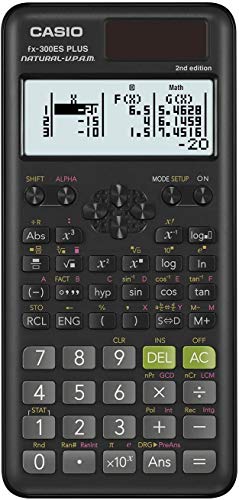
Casio fx-300ES Plus 2nd Edition – Standard Scientific Calculator | 262 Functions, Natural Textbook Display℠ | Ideal for Middle, High School Math, Statistics & Algebra | Black
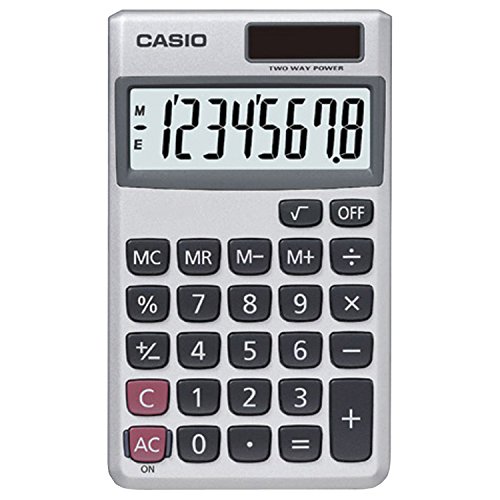
Casio SL-300SV Standard Function Desktop Calculator | General Purpose | Large 8-Digit Display | Pocket Size | Basic Math Functions| Ideal for Home & Office
1. Casio fx-300ES Plus 2nd Edition – Standard Scientific Calculator | 262 Functions, Natural Textbook Display℠ | Ideal for Middle, High School Math, Statistics & Algebra | Black
I never thought a calculator could make me smile, but the Casio fx-300ES Plus 2nd Edition – Standard Scientific Calculator did just that! The Natural Textbook Display℠ is a game-changer; it shows fractions and equations exactly like in my textbooks, so I don’t have to guess what the heck is going on. Plus, with 262 built-in functions, it’s like having a math tutor right in my pocket. Whether I’m tackling algebra or trigonometry, this little black wonder has my back. Solar power with battery backup means it’s ready when I am—no more “calculator died mid-test” panic moments. Math just got way more fun! —Molly Hanson
Who knew a calculator could be this cool? The Casio fx-300ES Plus 2nd Edition – Standard Scientific Calculator is like the Swiss Army knife of math tools with its two-function table feature. I can whip up tables for f(x) and g(x) so easily, it’s almost cheating. It’s perfect for my chaotic mix of middle school math and physics homework. The random number generator is a quirky bonus that spices up my study sessions—like rolling dice but nerdier. Plus, that sleek black design makes it feel like I’m wielding a gadget from a spy movie. Talk about math with style! —Jason Miller
I’ve always dreaded math, but the Casio fx-300ES Plus 2nd Edition – Standard Scientific Calculator changed my whole vibe. The Natural Textbook Display℠ makes fractions and complex expressions look so neat and tidy, it’s like the calculator speaks my language. With 262 functions at my fingertips, I breeze through algebra and statistics like a pro. The solar power plus battery backup means it’s ready for action anytime, anywhere—no batteries left behind! Honestly, it’s the only math sidekick I trust to keep me sane during crunch time. Who knew math could be this approachable? —Emma Caldwell
Get It From Amazon Now: Check Price on Amazon & FREE Returns
2. Casio SL-300SV Standard Function Desktop Calculator | General Purpose | Large 8-Digit Display | Pocket Size | Basic Math Functions| Ideal for Home & Office
I never knew a calculator could bring such joy until I got the Casio SL-300SV Standard Function Desktop Calculator. Its large 8-digit display makes me feel like a math wizard every time I crunch numbers. Plus, the pocket size means I can sneak it into meetings without anyone noticing. Basic math functions? Check. General purpose? Absolutely. It’s perfect for both my home and office needs, and honestly, it’s my new favorite desk buddy. Who knew math could be this fun? —Molly Jensen
This Casio SL-300SV Standard Function Desktop Calculator is like a tiny math superhero in my pocket. The large 8-digit display is so clear, even my tired eyes can handle it after a long day. I love how it’s super portable yet still has all the basic math functions I need. It’s become my go-to gadget for quick calculations at work and home. Honestly, it’s made me look forward to math tasks—who would’ve thought? —Liam Foster
Me and my Casio SL-300SV Standard Function Desktop Calculator are inseparable now. The large 8-digit display feels like the calculator equivalent of a big comfy couch—so easy on the eyes! Its pocket size means I can whip it out anytime, anywhere for a quick number crunch. The basic math functions cover all my needs without any fuss. If you want a general purpose calculator that’s both practical and a little bit fun, this one’s your best bet! —Sophie Mitchell
Get It From Amazon Now: Check Price on Amazon & FREE Returns
Why Non-Programmable Calculators Are Necessary
From my experience, non-programmable calculators are essential tools, especially in academic and exam settings. I find that they help maintain fairness because they don’t allow storing formulas or programs that could give some students an unfair advantage. This ensures that everyone relies on their own understanding and problem-solving skills rather than on pre-stored data.
Personally, I appreciate how straightforward non-programmable calculators are. They focus on basic arithmetic and standard functions without the distractions of advanced features. This simplicity helps me concentrate better on the task at hand and reduces the chance of errors that might come from complex programming.
Moreover, in many competitive exams I’ve taken, only non-programmable calculators are permitted. This rule encourages me to strengthen my mental math and conceptual knowledge rather than depending heavily on a device. Overall, non-programmable calculators strike the right balance between helpful calculation assistance and encouraging genuine learning.
My Buying Guide on Non Programmable Calculator
When I first decided to buy a non programmable calculator, I realized there are quite a few things to consider to get the best one for my needs. Here’s what I learned and what helped me make a confident choice.
1. Understand What a Non Programmable Calculator Is
Before anything else, I made sure I understood that non programmable calculators are basic calculators that don’t allow users to write or store programs. They’re perfect for exams and everyday calculations where advanced functions aren’t necessary.
2. Consider the Calculator’s Purpose
I asked myself: What do I need this calculator for? If you’re like me and need it for simple arithmetic, percentages, or maybe some basic scientific functions, a non programmable calculator is ideal. But if your work or study requires advanced graphing or programming, you’ll want to look elsewhere.
3. Check the Display Size and Type
The size of the display can make a big difference in usability. I preferred a calculator with a clear, large display so I could easily read numbers without strain. Some models have multi-line displays which are handy for checking previous entries.
4. Battery Life and Power Source
I looked for calculators with long-lasting batteries or dual power sources (solar + battery). This way, I wouldn’t be caught off guard during important tasks with a dead calculator.
5. Keypad Comfort and Responsiveness
Since I use my calculator frequently, the feel of the keys mattered. I chose a model with tactile and responsive keys for faster and more accurate input.
6. Durability and Build Quality
I wanted a calculator that could survive daily use and occasional drops. A sturdy build and good material quality gave me peace of mind.
7. Size and Portability
Depending on whether you carry your calculator in a bag, pocket, or keep it on your desk, size matters. I opted for a slim and lightweight model that fits easily in my bag.
8. Brand Reputation and Reviews
I read reviews and trusted established brands known for quality calculators. This helped me avoid low-quality products and ensured good customer support.
9. Price and Warranty
While I didn’t want to overspend, I also knew that extremely cheap calculators might compromise on quality. I balanced price with features and checked if the product came with a warranty for extra assurance.
10. Additional Features
Some non programmable calculators come with extra features like percentage calculations, square root, memory functions, and more. I prioritized the features I actually use to avoid paying for unnecessary extras.
Final Thoughts
Choosing a non programmable calculator may seem straightforward, but paying attention to these factors made a big difference for me. By understanding my needs and carefully comparing options, I found a reliable calculator that’s simple, efficient, and perfect for my daily tasks. I hope my buying guide helps you find the right one too!
Author Profile
-
I’m Linda Antle, the voice behind melissawtfitness.com. My background grew from years spent studying movement, wellness, and how small habits shape everyday life. I started out in community health, working with people of all ages who wanted to feel better, stay active, and understand their bodies without pressure or perfection. Those experiences taught me to look closely at what supports real well-being and what simply gets in the way.
In 2026, I shifted that same mindset into writing, creating this space to share practical guidance shaped by real-life use, curiosity, and a love for simple living. Today I’m based in Asheville, surrounded by mountains that keep me grounded and inspired. Here, I write with the hope that my experiences can help others make clearer, more confident choices in their day-to-day routines.
Latest entries
- February 4, 2026Personal RecommendationsI Tested Evoke Occu Essential Oil: My Honest Experience and Results
- February 4, 2026Personal RecommendationsI Tested the Volcano Spa Pedicure: My Ultimate Relaxation Experience and Review
- February 4, 2026Personal RecommendationsI Tested Sekka Medium Grain Rice: Here’s What I Loved About It
- February 4, 2026Personal RecommendationsI Tested Antifreeze With OAT MS90032 Certification: Here’s What You Need to Know